

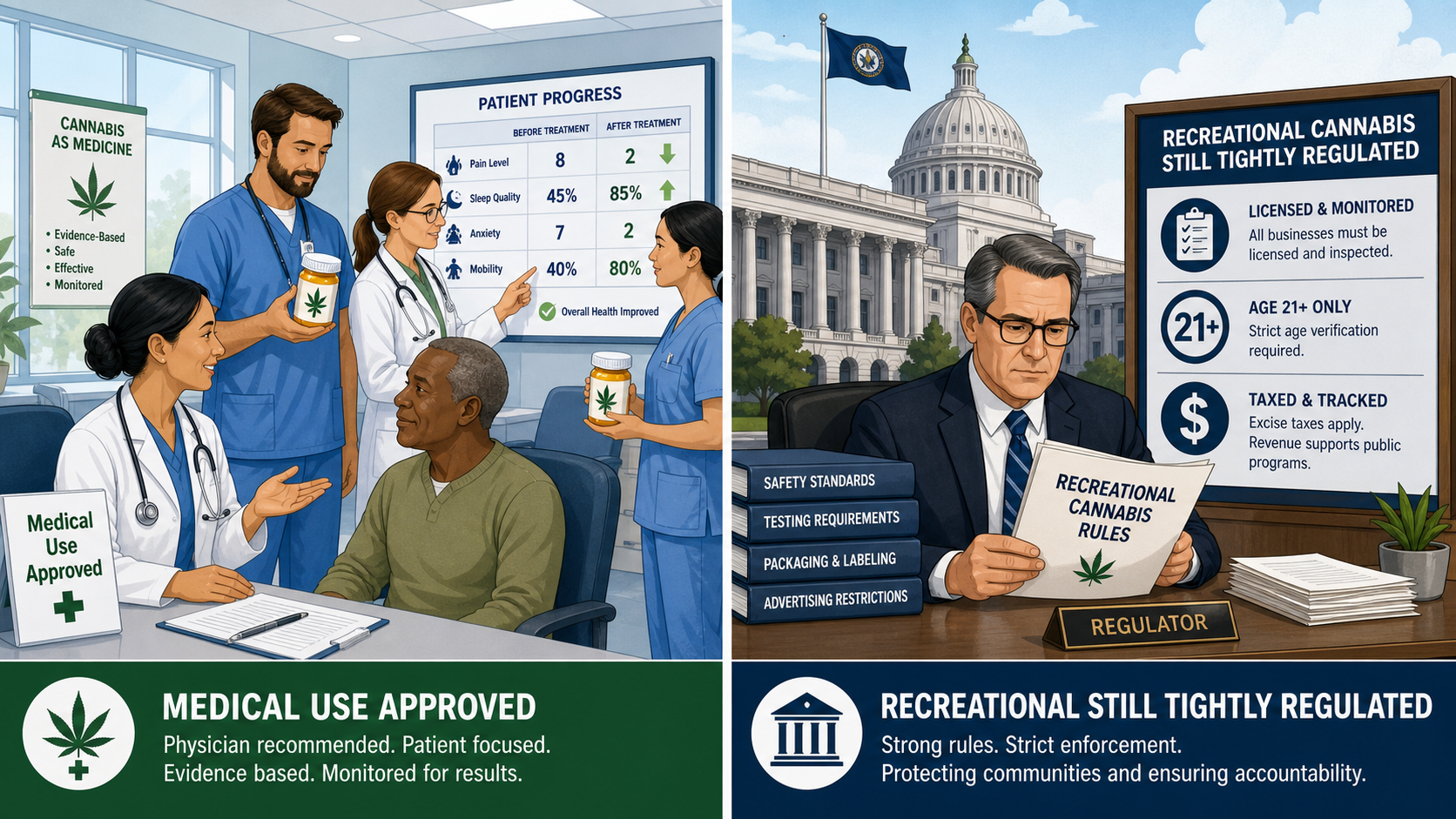
At the end of April 2026, the federal government took a major step by moving FDA‑approved marijuana products and marijuana sold under qualifying state medical marijuana licenses from Schedule I to Schedule III of the Controlled Substances Act. This change recognizes accepted medical use and makes it easier to conduct clinical research, but it does not fully legalize cannabis or authorize recreational use at the federal level. An administrative hearing is scheduled for June 29, 2026, to consider whether marijuana more broadly should also be moved to Schedule III, so this landscape will continue to evolve.
From a tax perspective, the biggest development is relief from Internal Revenue Code Section 280E for businesses that, because of this order, are now dealing only in Schedule III medical marijuana rather than Schedule I or II substances. Once a business qualifies under the new rules, ordinary and necessary operating expenses (rent, payroll, marketing, professional fees, etc.) can generally be deducted again, instead of being disallowed under 280E. This can dramatically improve after‑tax cash flow and profitability, and it changes the calculus for pricing, expansion, and financing in the medical cannabis space. However, mixed operators that sell both state‑licensed medical and adult‑use cannabis will likely need to carefully track and allocate income and expenses between the Schedule III and Schedule I sides of the business until broader rescheduling is finalized.
Banking and capital access are also affected, but the landscape is still far from simple. Rescheduling to Schedule III reduces (but does not eliminate) federal legal risk for financial institutions that work with compliant, state‑licensed medical marijuana businesses, which should gradually improve access to basic banking and possibly institutional investment. At the same time, cannabis remains a controlled substance, the core federal money‑laundering statutes still apply, and the long‑discussed SAFE Banking Act has not yet passed, so many banks will remain cautious until they see clearer regulatory guidance. This means cannabis operators should not assume that “banking is solved,” but rather that more relationship‑oriented and regional institutions may begin to expand services—especially for medical operators who can demonstrate strong compliance.
All of this happens against a backdrop where many states have already legalized cannabis at the state level. As of 2026, adult‑use (recreational) cannabis is legal in more than 20 states plus Washington, D.C., including California, New Jersey, New York, Colorado, Illinois, Maryland, Massachusetts, Michigan, Minnesota, Missouri, Nevada, New Mexico, Ohio, Oregon, Rhode Island, Vermont, Virginia, Washington, and others. Even in these states, federal law still matters: adult‑use cannabis remains Schedule I for now, and federal rules continue to affect taxes, banking, and cross‑state operations. If you operate a cannabis-related business—or are considering entering the space—you should be familiar with these new changes (plus probably more to come).
