

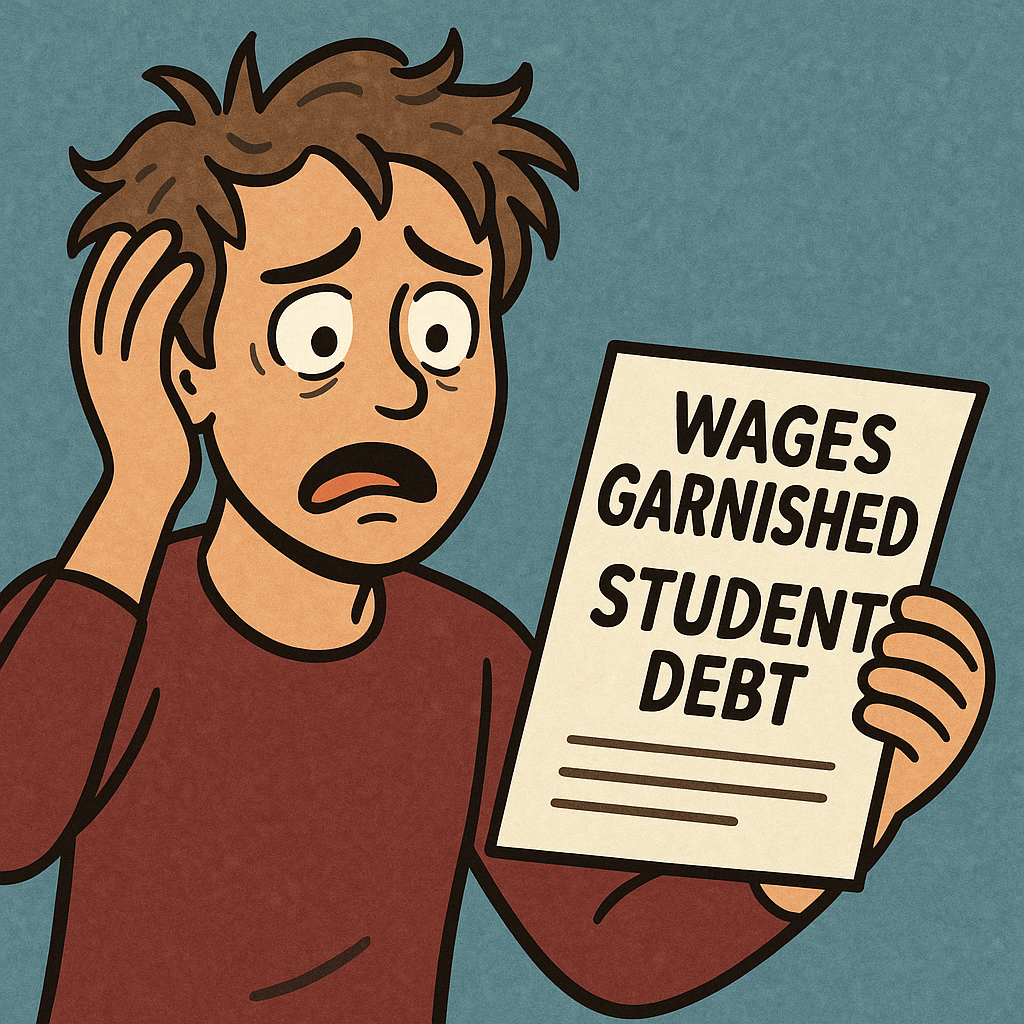
Last month, the U.S Department of Education released a press release to indicate how they would target the borrowers in default and one of the options of repayment is the wage garnishment. The press released pointed to “… More than 5 million borrowers have not made a monthly payment in over 360 days and sit in default—many for more than 7 years—and 4 million borrowers are in late-stage delinquency (91-180 days).”
This is a significant change with the previous President Biden’s policies – Biden proposed the $10,000 to $20,000 mass forgiveness of student debt, which was blocked in the Biden v. Nebraska decision in June 2023. On the other hand, President Trump has focused on enforcement and resuming collections (even trying to dismantle the Education Department).
How garnishment works – A garnishment happens when you default on a debt. In general, the creditor will go to court and get a judgement to get part of your wages, with certain no court requirement exceptions like a) federal student loans (Department of Education), b) unpaid taxes at the Federal or State level and c) child support and alimony.
Your employer will get a notice and the employer is legally required to comply withholding part of your salary in the paystub.
Note that there are certain limits as any debtor has to keep enough funds to cover the basic expenses, plus depending on the type of debts, there might be additional limitations (i.e. up to 15% limitation of disposable pay via administrative wage garnishment)
If you have more questions, on this topic, feel free to reach out to our team.
U.S. Department of Education – Press Release – U.S. Department of Education to Begin Federal Student Loan Collections, Other Actions to Help Borrowers Get Back into Repayment
CNBC’s article – Trump administration to garnish wages of 5.3 million defaulted student loan borrowers this summer
Washington Post’s article – Education Department to resume seizing wages for student loan debt
