

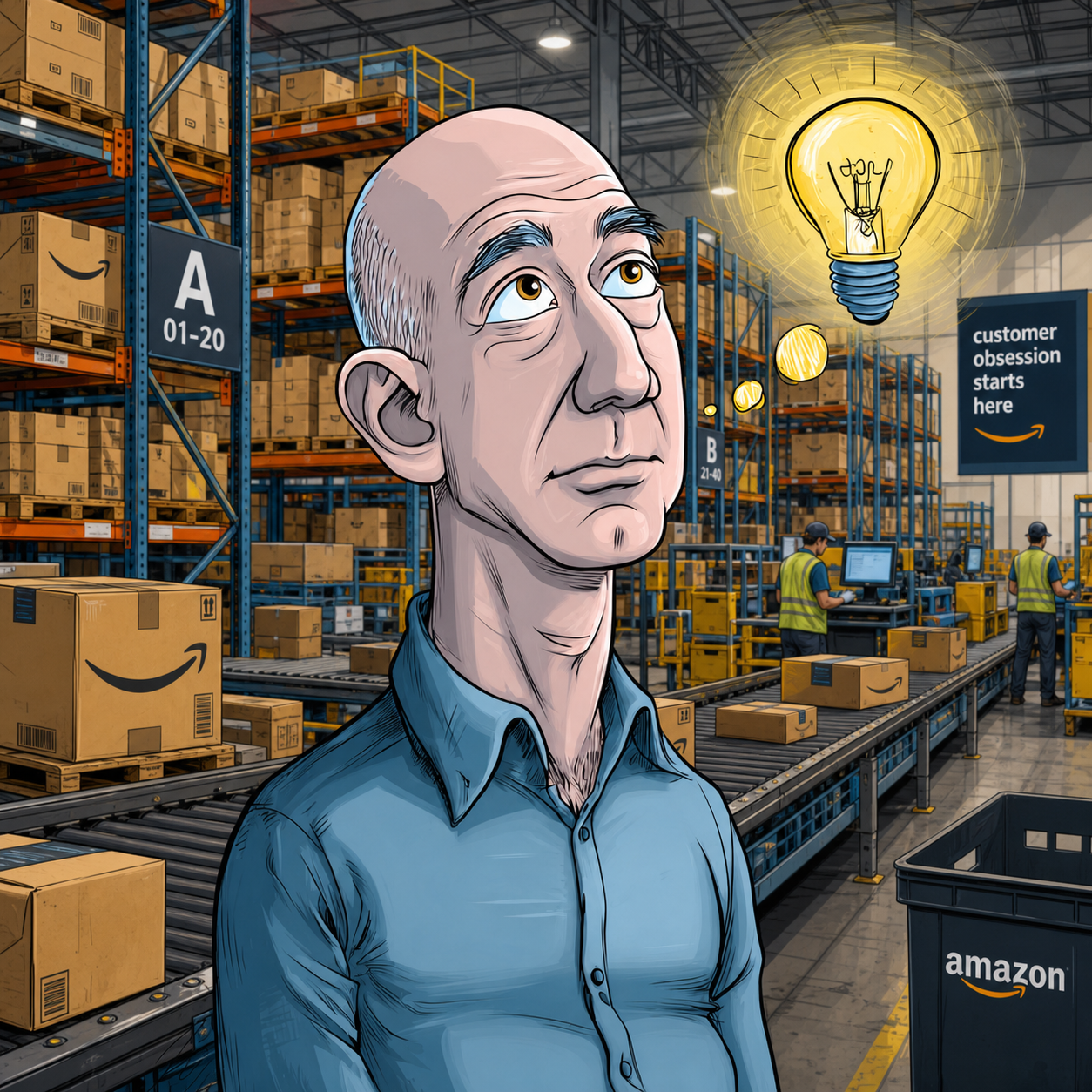
Last Wednesday, Jeff Bezos said in a CNBC interview that the bottom 50% of Americans should not pay federal income taxes. That comment generated headlines in outlets like Fortune, CNBC, Forbes, CPA Practice Advisor, and many others that I read over Memorial Day weekend (and last Thursday I listened to the entire interview – link at the end of the post).
As a tax reform advocate, I see several important points that often get lost in this discussion:
- The bottom 50% contributes around 3% of the Federal income tax revenue per the CNBC article
- A large portion of the bottom ~40% has little to no Federal income tax liability, and refundable credits like the Earned Income Tax Credit can result in net refunds per the CNBC article; improper payment rates for the EITC have been estimated in the ~33% range in recent IRS reports
- What is missing in much of the media coverage is that the bottom 50% still pays many other taxes: payroll taxes (around 15% for the self‑employed, or roughly 7.5% employee and 7.5% employer for W‑2 wages), property taxes (directly for homeowners or indirectly through rent), and consumption taxes like sales, fuel, and other excise taxes. When you add these up, the comprehensive effective tax burden on low‑ and middle‑income households is much higher than the narrow “federal income tax” lens suggests, and in some ways proportionally heavier than for the very wealthy.
What about the elephant in the room?
If the U.S. were a household, the numbers would roughly look like this:
• Income: $50,000
• Spending: $70,000
• Annual deficit: $20,000
• Existing debt: approximately $392,000 and growing every second
In that analogy, Bezos is talking about 3% of the income side—around 1,500 dollars. That is the equivalent of telling this already dysfunctional household to fix its finances by skipping a five‑dollar coffee on each workday, while ignoring the much larger structural problem.
Bezos suggests the government could find that missing 3% by cutting waste. He even leans into how inefficient government can be, pointing specifically to the New York City school system: “If we ran Amazon the way New York City runs their school system, your packages would take six weeks to arrive. We’d have to charge you a 100‑dollar delivery fee. And then when the package did finally arrive, it’d have the wrong item in it anyway.”
How do we get to a better place?
There are only some options to get out of this and move toward a healthier financial position:
- Increase money in → Raise taxes
- Reduce expenses → Reduce budget
- Restructure debt → Default on debt (or technically fail to meet its obligations which has already happened in US history)
- An unexpected event that changes the equation entirely (for example, sustained real inflation higher than reported that erodes the real value of the debt)
Given the current political climate, Option A (raising more revenue) appears to be the most popular. Even Option B, via the DOGE initiative, is modest in scale: DOGE claims about 150–215 billion dollars in estimated savings, which is only around 2% of the federal spending budget or about 3–4% of federal income‑tax revenues. Many budget experts, however, estimate the realistic short‑term savings closer to 5–15 billion dollars (clearly insufficient to get out of this mess).
Tax the rich
-
- The 1% pays 40-46% of Federal income taxes and owes 30-32% of the wealth
- The 10% pays 70-74% of Federal income taxes and owes 65-70% of the wealth
Calls to “tax the rich” more heavily need to consider behavioral responses and the Laffer curve. Higher marginal tax pressure on top earners can create unintended consequences:
- France repealed its wealth tax in 2017 after years of millionaire outflows.
- The UK has recently experienced increased millionaire migration following tax changes.
- In the U.S., migration patterns continue from higher-tax states such as New York and California toward lower-tax states like Texas and Florida.
Tax the corporations
-
- Warren Buffett in the 2024 Berkshire Hathaway annual shareholder meeting in Omaha stated “If we send in a check like we did last year — we sent in over $5 billion to the U.S. federal government — and if 800 other companies had done the same thing, no other person in the United States would have had to pay a dime of federal taxes…”
- Some large corporations, including Amazon, have reported low effective federal tax rates (sometimes in the single digits) in certain years over the past decade, despite statutory rates of 35% pre-2018 and 21% post-TCJA. This is often due to credits, stock‑based compensation, and timing differences. Additionally, multinational companies often use international IP structures (including in jurisdictions like Luxembourg) as part of their global tax planning strategies
If large corporations were to face materially higher effective tax rates, it could reduce after-tax earnings, impact global competitiveness, and put pressure on equity markets—ultimately affecting retirement accounts, pension plans, and 401(k)s that rely on corporate performance.
Beyond the headline
Bezos has generated major headlines with bold statements, including the idea that successful businesses create more societal value than philanthropy. It is hard to deny that he has created enormous value for customers (who continue to use and value Amazon’s services) and for shareholders (he still owns around 8.19% of the stock). Some of his comments are a useful starting point for debate (probably headed in the right direction), but our policy goals need to be far more ambitious than his talking points.
Tax reform is far more complex than a viral soundbite about the bottom 50% paying no federal income tax. Real, durable reform will require a mix of approaches, explicit trade‑offs, and sustained political will. It cannot be reduced to a single headline solution, as I have seen firsthand in my work on the Philadelphia Tax Reform Commission.
Youtube Link – Squawk Pod: Jeff Bezos & Andrew Ross Sorkin at Blue Origin – 05/20/26
